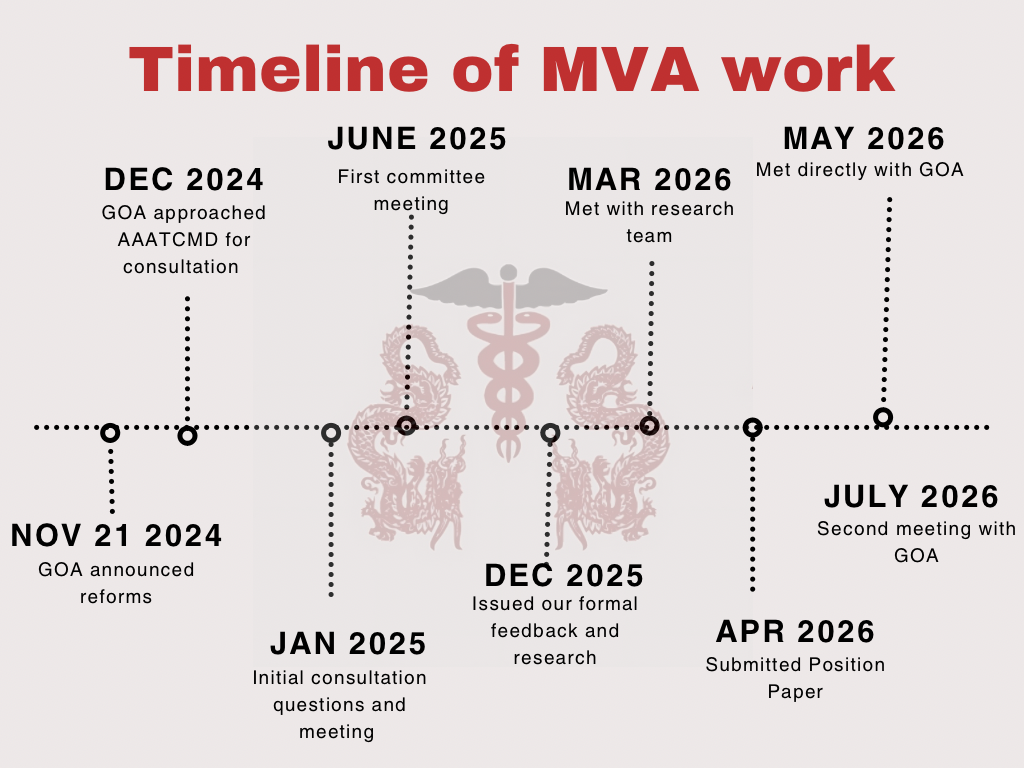
AAATCMD’s MVA Advocacy: A Timeline of Engagement, Evidence and Action In 2024, the AAATCMD was…

Understanding Acupuncture Research: What Does “Good Evidence” Actually Mean?
We hear the phrase “evidence-based” everywhere in healthcare.
A treatment is described as evidence-based. A news story reports that a new study has “proven” something. A social media post cites research supporting—or dismissing—a particular therapy.
But what does good evidence actually look like?
Whether you are a healthcare professional, patient, policymaker, or simply someone trying to make an informed healthcare decision, understanding the quality of research is just as important as knowing that research exists.
Acupuncture provides an interesting example. It has been the subject of thousands of studies, but—as with virtually every area of healthcare—not every study is equally informative. Some areas of acupuncture have substantial bodies of randomized controlled trials and systematic reviews, while evidence for other applications remains preliminary or uncertain. Understanding that distinction is an important part of evidence-informed healthcare.
Start With the Question, Not the Conclusion
One of the most common mistakes when discussing healthcare research is asking an overly broad question:
“Does acupuncture work?”
Scientifically, that question tells us very little.
We don’t generally ask whether “medication works” or “physiotherapy works.” We ask whether a particular intervention is effective for a particular condition, in a particular group of patients, compared with another intervention, and for a specific outcome.
A better way to approach acupuncture research is to ask:
- What condition is being treated?
- What acupuncture intervention was used?
- Who were the patients?
- What was acupuncture compared with?
- What outcomes were measured?
- How large was the effect?
- Did the benefit last?
- Have other studies produced similar findings?
Those questions produce a much more meaningful conversation about evidence.
Not All Studies Provide the Same Level of Evidence
Imagine reading the headline:
“Study Finds Acupuncture Reduces Shoulder Pain.”
Before drawing conclusions, we need to know more.
Was this a report involving five patients or a randomized trial involving hundreds?
Was acupuncture compared with no treatment, usual care, another treatment, or sham acupuncture?
Were validated measures of pain and function used?
Were patients followed for one week or six months?
Was the study subsequently replicated?
These details matter.
A case report or observational study can identify interesting possibilities and generate research questions. Randomized controlled trials can provide stronger evidence about whether an intervention contributes to an outcome.
Systematic reviews go further by identifying and critically evaluating multiple studies addressing the same question.
When appropriate, a meta-analysis can statistically combine results from several studies to estimate an overall treatment effect.
Rather than relying on a single positive—or negative—study, we should therefore look at the totality, consistency, and quality of the evidence.
What Should You Look for in a Good Study?
You do not need to be a researcher to ask useful questions about a study.
Was the study large enough?
Small studies can provide valuable information, but their estimates are generally less precise. Larger, appropriately powered studies can provide greater confidence in the results.
Were participants randomized?
Randomization helps create comparable groups and reduces the influence of factors that might otherwise distort the results.
What was the comparison?
This is especially important in acupuncture research.
Acupuncture might be compared with:
- No treatment
- Usual medical care
- Another active treatment
- Acupuncture added to usual care
- Sham acupuncture
Each comparison answers a somewhat different clinical question.
Were meaningful outcomes measured?
Pain scores can be important, but patients usually care about much more than a number on a scale.
Can they move better?
Can they sleep?
Can they return to work?
Can they participate in sport or family activities?
Are they using less medication?
Has their quality of life improved?
Good clinical research increasingly examines these patient-centred outcomes.
How long did the researchers follow patients?
An intervention that provides relief for several hours is different from one associated with improvement lasting several months.
Longer follow-up can be particularly important when studying chronic pain.
Has the finding been reproduced?
One study rarely provides the final answer.
When multiple independent studies examining similar questions produce reasonably consistent findings, confidence in the overall evidence increases.
The Particular Challenge of Studying Acupuncture
Acupuncture also presents some fascinating research-methodology challenges.
In a pharmaceutical trial, researchers can often compare a medication with a tablet that looks identical but contains no active medication.
Creating a completely inert acupuncture placebo is much more complicated.
Researchers have used several forms of “sham” acupuncture, including superficial needling, needling at different locations, and non-penetrating devices.
The challenge is that touching, pressing, or superficially stimulating the body may not necessarily be physiologically inactive.
This does not make sham-controlled acupuncture research invalid. It means readers need to understand exactly what the comparison was before interpreting the magnitude of the difference between groups.
For example, finding that acupuncture performs better than usual care answers a different question from finding that acupuncture produces a modest additional benefit compared with a sophisticated sham procedure.
Both findings can be scientifically useful.
Where Does Acupuncture Have a Substantial Research Base?
Acupuncture has been investigated across an enormous range of conditions. The evidence is not equally strong for all of them.
Some of the most extensively researched areas include:
Chronic Musculoskeletal Pain
Pain is among the most extensively studied applications of acupuncture.
Research has examined acupuncture for chronic low back pain, neck pain, osteoarthritis and other musculoskeletal conditions using randomized controlled trials, systematic reviews and large meta-analyses.
This body of research allows researchers to move beyond simply asking whether patients improve and investigate questions such as the magnitude and duration of benefit and how acupuncture compares with different control interventions.
Headache and Migraine
Acupuncture has also been extensively studied for migraine prevention and other headache disorders.
Systematic reviews have evaluated acupuncture against usual care, sham procedures and preventive treatments. As is common in clinical research, conclusions depend partly upon the comparison being made.
This makes headache research an excellent example of why reading beyond the headline matters.
Osteoarthritis
Knee osteoarthritis has been studied in numerous acupuncture trials.
Researchers have examined outcomes such as pain, physical function, mobility and quality of life.
Because osteoarthritis is usually managed rather than “cured,” research into interventions that may contribute to symptom management and function is particularly relevant to patients and healthcare professionals.
Shoulder and Orthopedic Conditions
A growing body of research has investigated acupuncture for orthopedic conditions including chronic shoulder pain, rotator cuff disorders, adhesive capsulitis and post-stroke shoulder pain.
The acupuncture literature includes randomized controlled trials as well as systematic reviews and meta-analyses examining these conditions.
This research is particularly relevant when considering acupuncture as one component of multidisciplinary musculoskeletal and rehabilitation care.
What About Stress and Emotional Health?
This is another area where careful language matters.
Many patients report feeling calmer, sleeping better, or experiencing improvements in overall well-being during acupuncture care. Acupuncture has also been studied for anxiety, depression, insomnia and stress-related outcomes.
However, the existence of studies does not automatically mean that the evidence is equally strong across all of these conditions.
Research quality, study size, diagnostic criteria, treatment protocols and comparator groups vary considerably.
Rather than claiming that acupuncture universally “treats stress,” a more evidence-informed approach is to recognize this as an active area of research and evaluate individual indications according to the quality of the available evidence.
That distinction is important for both practitioners and patients.
Research Quality Is Not the Same as Research Results
There is another important concept that is sometimes overlooked.
A study can be well designed and find that a treatment does not provide a meaningful benefit.
That is still good research.
Conversely, a poorly designed study can report an impressive positive result without providing particularly strong evidence.
Research quality should therefore not be judged according to whether we like the conclusion.
Healthcare professionals have a responsibility to examine evidence critically—even when it challenges our existing beliefs.
Patients deserve the same transparency.
Evidence-Informed Care Is Bigger Than a Research Paper
Research is essential, but clinical decision-making involves more than finding a study.
Evidence-informed healthcare brings together:
Best available research evidence
Clinical expertise
Patient circumstances, goals, preferences and values
A treatment that demonstrates benefit across a population may not be appropriate for every individual patient. Conversely, treatment decisions sometimes need to be made in areas where research remains incomplete.
That is where clinical reasoning, informed consent, patient preference, safety considerations and ongoing reassessment become particularly important.
Be Curious About Evidence—Not Intimidated by It
Research literacy should not belong exclusively to academics.
Patients can ask:
“What evidence supports this treatment?”
Practitioners can ask:
“How good is that evidence?”
Researchers can ask:
“How can we design a better study?”
And policymakers can ask:
“Does the totality of evidence justify including this treatment within a particular healthcare pathway?”
These are healthier questions than simply dividing healthcare into treatments that “work” and treatments that “don’t.”
Acupuncture research is a good example of why nuance matters. Some areas have relatively mature evidence bases involving randomized trials, systematic reviews and meta-analyses. Other applications require considerably more investigation.
That is not a weakness of evidence-informed healthcare.
That is how science is supposed to work.
The goal should never be to use research simply to validate what we already believe. The goal is to continually ask better questions, produce better studies, interpret the findings fairly, and use that knowledge to help patients make informed decisions about their care.
References:
- Vickers AJ, Vertosick EA, Lewith G, et al. Acupuncture for chronic pain: update of an individual patient data meta-analysis. Journal of Pain. 2018;19(5):455–474.
- Vickers AJ, Cronin AM, Maschino AC, et al. Acupuncture for chronic pain: individual patient data meta-analysis. Archives of Internal Medicine. 2012;172(19):1444–1453.
- Linde K, Allais G, Brinkhaus B, et al. Acupuncture for the prevention of episodic migraine. Cochrane Database of Systematic Reviews. 2016;(6):CD001218.
- Manheimer E, Cheng K, Linde K, et al. Acupuncture for peripheral joint osteoarthritis. Cochrane Database of Systematic Reviews. 2010;(1):CD001977.
- MacPherson H, Vertosick E, Lewith G, et al. Influence of control group on effect size in trials of acupuncture for chronic pain: a secondary analysis of an individual patient data meta-analysis. PLoS ONE. 2014;9(4):e93739.
- MacPherson H, Maschino AC, Lewith G, et al. Characteristics of acupuncture treatment associated with outcome: an individual patient meta-analysis of 17,922 patients with chronic pain in randomised controlled trials. PLoS ONE. 2013;8(10):e77438.
- National Center for Complementary and Integrative Health. Acupuncture: Effectiveness and Safety. National Institutes of Health.
- Sackett DL, Rosenberg WMC, Gray JAM, Haynes RB, Richardson WS. Evidence based medicine: what it is and what it isn’t. BMJ. 1996;312:71–72.

Related Posts